Ascending Infection
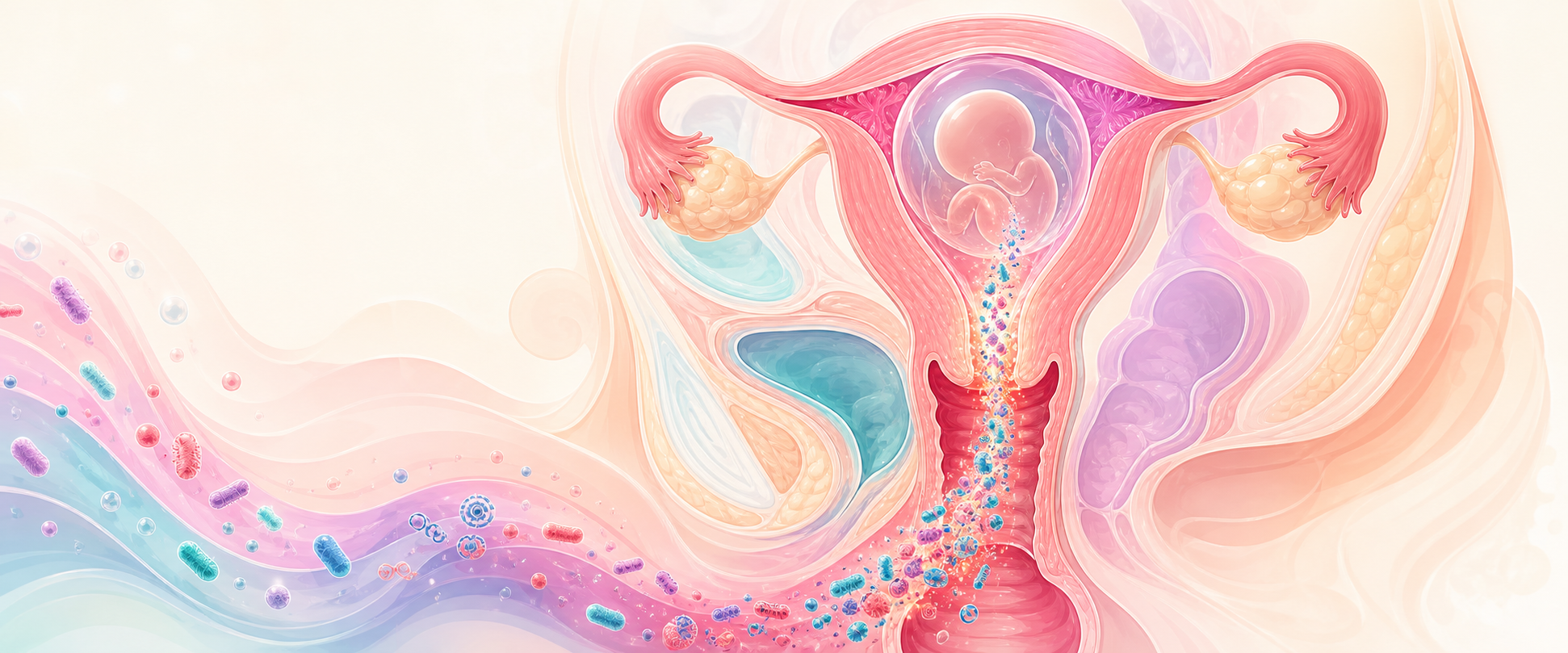
Start from one fact that organises this whole chapter: the vagina is heavily colonised, but the uterine cavity, tubes and amniotic cavity are normally sterile. Two compartments sit a few centimetres apart, one teeming with bacteria and one kept clean, separated by a stack of barriers. Almost every infection in this chapter is the story of those barriers failing and the lower compartment seeding the upper one.
Ascending infection is exactly that: organisms move from the lower genital tract upward through the cervix into the endometrium, tubes, decidua, membranes, amniotic fluid, placenta, fetus or postpartum uterine cavity. It is the shared microbiological pathway behind pelvic inflammatory disease (PID), post-procedure endometritis, chorioamnionitis, preterm prelabour rupture of membranes (PPROM), spontaneous preterm labour, early-onset neonatal sepsis and puerperal sepsis. Different syndromes, one route.
The Primary exam does not reward a memorised organism list alone. It rewards a chain of reasoning: lower tract reservoir -> barrier failure -> tissue invasion -> inflammation -> clinical syndrome. We will build that chain one link at a time, starting with the reservoir and its first barrier (the vaginal microbiome), then ascending anatomically through cervix, uterus, tube, membranes and fetus, and only then attaching organisms and clinical syndromes to each level. Once the chain is clear, the same anatomy explains why chlamydia can cause tubal infertility, why repeated vaginal examinations after rupture of membranes raise infection risk, why caesarean prophylaxis works, and why postpartum endometritis is usually polymicrobial.
Ascending Versus Other Infection Routes
Not every maternal or fetal infection is ascending. The route predicts the organism, the specimen and the clinical consequence.
| Route | Starting point | Examples | Main exam clue |
|---|---|---|---|
| Ascending | Vagina/cervix moving upward | PID, chorioamnionitis, PPROM-related infection, postpartum endometritis | Discharge/cervicitis, ruptured membranes, uterine tenderness, pelvic pain |
| Haematogenous | Maternal bloodstream crossing placenta | Syphilis, listeria, malaria, rubella, CMV, toxoplasma | Systemic maternal illness or fetal congenital pattern |
| Intrapartum exposure | Birth canal contact | HSV, gonorrhoea, chlamydia, GBS, HIV if viraemic | Neonatal eye, skin, sepsis or virological risk after delivery |
| Postnatal exposure | Breast, skin, respiratory or household contact | Mastitis organisms, TB exposure, respiratory viruses | Baby or mother becomes symptomatic after birth |
| Iatrogenic inoculation | Procedure, theatre, instrument or hand entry | Post-TOP infection, post-caesarean endometritis, septic miscarriage | Recent uterine entry or surgery |
This distinction prevents common errors. Congenital rubella is not caused by vaginal ascent; it is transplacental. Neonatal chlamydial conjunctivitis is usually birth-canal exposure, not fetal infection through intact membranes. Post-caesarean endometritis may begin as ascending flora but is amplified by surgical entry and the postpartum placental bed.
The Vaginal Microbiome: the First Barrier
Before any organism can ascend, it has to survive in the vagina. The healthy vagina is not a sterile space waiting to be invaded; it is an actively defended ecosystem, and that ecosystem is the first barrier in the stack.
The mechanism is hormonal and biochemical. Circulating oestrogen drives the vaginal squamous epithelium to lay down glycogen. Glycogen is broken down to glucose, and resident lactobacilli ferment that glucose to lactic acid, holding the vaginal pH below about 4.5. This acidity, together with hydrogen peroxide and bacteriocins produced by lactobacilli and simple competition for nutrients and adhesion sites, is what microbiologists call colonisation resistance — the established flora actively excludes newcomers.
It helps to think of the vaginal flora as falling into recognisable community patterns rather than a single "normal". Most reproductive-age women carry a low-diversity community dominated by one Lactobacillus species (most protectively L. crispatus, but also L. gasseri, L. iners or L. jensenii). A minority carry a high-diversity community in which lactobacilli are scarce and strict anaerobes such as Prevotella, Gardnerella, Mobiluncus, Megasphaera and related genera predominate. This high-diversity, lactobacillus-depleted state is the microbiological substrate of bacterial vaginosis (BV) and is the pattern most consistently linked to ascending infection, preterm birth and PPROM.
Two points matter for the rest of the chapter. First, BV is a shift in a whole community, not a single pathogen — which is why no one organism "is" BV and why a fishy discharge with clue cells reflects an ecosystem, not an infection of the vaginal wall (there is little true inflammation, hence "vaginosis" not "vaginitis"). Second, anything that strips lactobacilli or raises pH — menses (blood is alkaline), semen, douching, broad-spectrum antibiotics or intravaginal products — temporarily lowers colonisation resistance and is a real, modifiable risk window for ascent. The microbiome is dynamic, and risk moves with it.
Barrier Stack
With the microbiome understood as the first line, we can lay out the full defence. The upper genital tract is protected by several barriers arranged in series. Ascending infection becomes likely when enough barriers fail at the same time.
| Barrier | Normal function | How it fails |
|---|---|---|
| Vaginal microbiome | Colonisation resistance, acidic pH in many reproductive-age women | BV-type dysbiosis, antibiotics, semen, blood, douching |
| Cervical mucus | Traps organisms and contains immune mediators | Cervicitis, labour, cervical insufficiency, procedures |
| Closed cervix and cervical length | Mechanical separation of lower and upper tracts | Short cervix, dilation, miscarriage, labour, instrumentation |
| Intact membranes | Physical barrier around amniotic cavity | PROM, PPROM, invasive procedures, ascending enzymatic damage |
| Decidua and placenta | Immune regulation and compartment separation | Inflammation, infarction, haematogenous infection, abruption |
| Aseptic clinical technique | Prevents iatrogenic inoculation | Unnecessary vaginal examinations, non-sterile procedures |
Barrier failure is cumulative. A patient with BV, ruptured membranes for many hours, repeated digital examinations and HIV-related immunosuppression has a different risk profile from a patient with intact membranes, no fever and a single sterile speculum examination.