Clinical overview
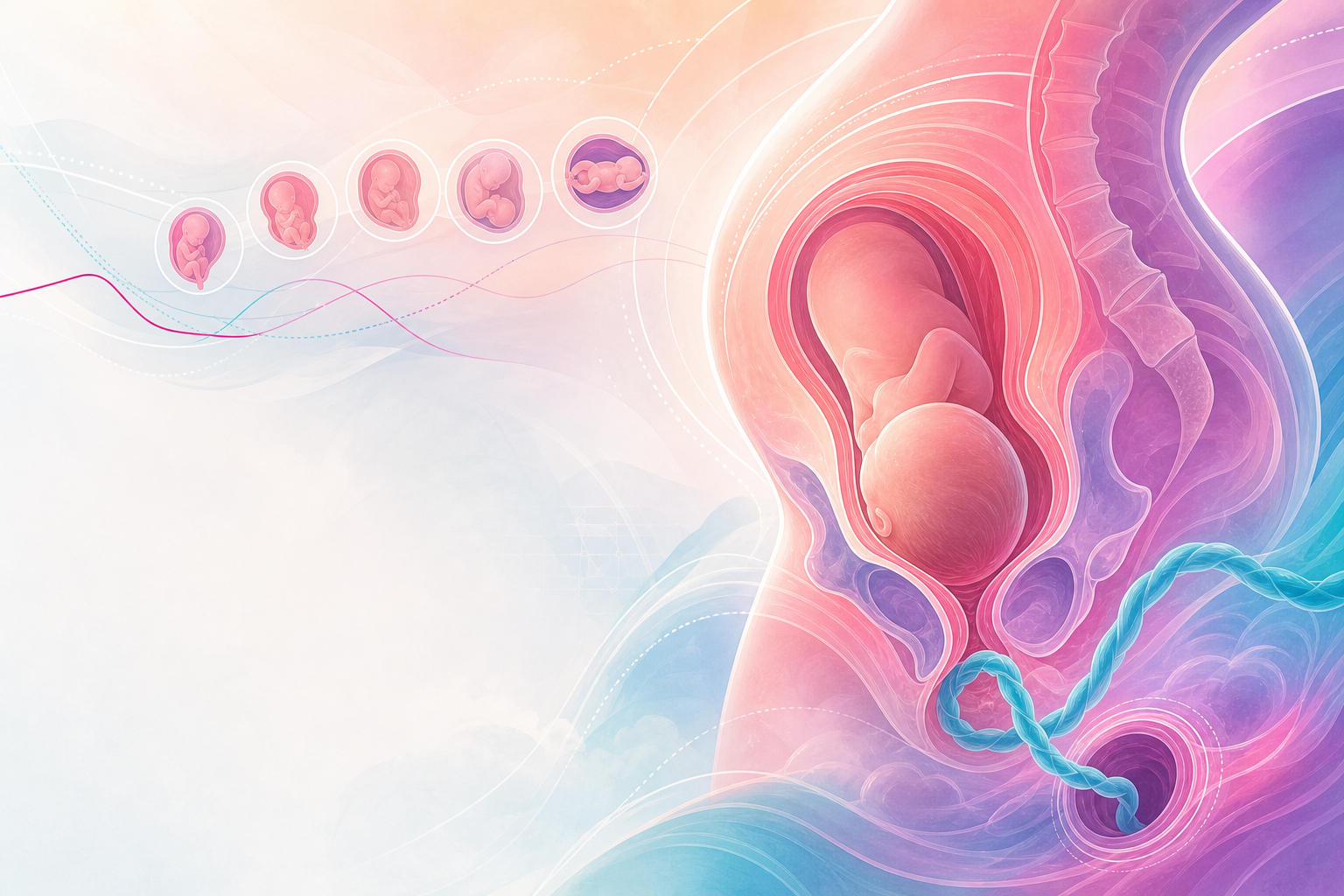
Most labour is normal, but a minority deviates — and the deviations on this objective are the ones that fill the obstetric haemorrhage, ruptured-uterus and intrapartum-asphyxia lines of the Saving Mothers and perinatal mortality reports. Complicated labour spans a spectrum: the slow-burning problem of poor progress and cephalopelvic disproportion (CPD), where the cardinal danger is obstructed labour leading to uterine rupture, fistula and sepsis; the malpresentations and malpositions that mechanically obstruct or demand a different delivery route; and the two true intrapartum emergencies on this list — shoulder dystocia and cord prolapse — where the fetus can die or be permanently injured in minutes.
For the FCOG(SA) registrar the unifying skill is recognition then decisive action. The partogram is the surveillance tool that turns a vague "slow labour" into a defined, actionable diagnosis (see partogram-use); the CTG and intermittent auscultation tell you whether the fetus is tolerating the delay (see ctg-interpretation and fetal-monitoring-methods). South African practice is shaped by levels of care: a woman in obstructed labour at a clinic must be recognised, stabilised and transferred, because definitive management — caesarean, instrumental delivery, theatre for the dystocia that fails — needs a doctor and an operating facility. The National Integrated Maternal and Perinatal Care Guideline (NDoH, 2024) frames the partogram, referral lines and the obstetric emergency drills that follow.
Core knowledge
The determinants — powers, passage, passenger
Progress in labour is the product of three classically described factors. The powers are uterine contractions: adequate labour is conventionally taught as three to five contractions in ten minutes, each lasting 40–60 seconds, generating a coordinated fundal-dominant wave. The passage is the bony pelvis (gynaecoid is most favourable; android and platypelloid predispose to arrest) and the soft tissues of the cervix and perineum. The passenger is the fetus — its size, lie, presentation, position, attitude (degree of flexion) and the presence of any anomaly such as hydrocephalus. Poor progress is always a failure of one or more of these, and the diagnostic task is to decide which.
Figure J1.1 — Poor progress is a three-Ps diagnosis: augment only when contractions are inadequate and obstruction has been excluded; adequate contractions with arrest or obstruction means CPD and caesarean.
Defining poor progress
Labour is divided into the latent phase (cervix effacing and dilating to ~4–6 cm) and the active first stage. Prolonged latent phase is common, often benign, and over-diagnosing it leads to unnecessary intervention. In the active first stage, slow progress is classically defined as cervical dilatation of less than ~1 cm/hour, though contemporary guidance (the WHO Labour Care Guide, 2020 and NICE NG235 Intrapartum care, 2023) cautions against rigid linear expectations and emphasises individualised assessment with alert thresholds rather than a single universal rate (standard teaching; flag — exact rates vary by source). The active first stage disorders are protraction (slower than expected) and arrest (no cervical change over a defined interval despite adequate contractions). The second stage is prolonged when there is no progress in descent and rotation over a defined period — broadly around two hours in a nullipara without epidural and one hour in a multipara, extended by roughly an hour with regional analgesia (standard teaching; flag — thresholds vary by guideline and parity).
Cephalopelvic disproportion and obstructed labour
CPD means the fetal head is too large, or the maternal pelvis too small or unfavourably shaped, for safe vaginal passage. It is frequently relative — a deflexed or malpositioned head (occipitoposterior, occipitotransverse, brow) presents a larger diameter and behaves like absolute disproportion. CPD is a clinical diagnosis made in labour, not reliably predicted antenatally; clinical pelvimetry and even imaging poorly predict outcome, and a trial of labour with vigilant monitoring is the usual approach where there is no absolute contraindication.
When disproportion or malpresentation is not relieved, the result is obstructed labour — the presenting part cannot descend despite strong contractions. The classic signs are a tonically contracting, tender uterus with a palpable Bandl's ring (a pathological retraction ring rising up the abdomen), gross caput and moulding, maternal exhaustion, dehydration, oliguria and fetal distress. Obstructed labour is the gateway to uterine rupture (see uterine-rupture), obstetric fistula (see gynaecological-fistulas), intrapartum sepsis and stillbirth, and remains a preventable cause of maternal and perinatal death in under-resourced settings. Moulding and caput are graded on the partogram precisely because their progression warns of disproportion.
Malpresentations and malpositions
A malposition is an abnormal position of the vertex — occipitoposterior (OP) and occipitotransverse (OT) — which presents wider diameters and is the commonest cause of arrest in the first and second stages. A malpresentation is any presentation other than the well-flexed vertex:
- Breech — the commonest malpresentation at term (see breech-management); managed by external cephalic version, planned caesarean, or selected vaginal breech birth.
- Brow — the largest presenting diameter (mentovertical); incompatible with vaginal delivery at term unless it converts to face or vertex, so persistent brow needs caesarean.
- Face — mento-anterior may deliver vaginally; mento-posterior cannot and needs caesarean.
- Transverse/oblique lie / shoulder presentation — no mechanism for vaginal delivery; in labour with ruptured membranes it risks cord prolapse and arm prolapse and is an indication for caesarean (after excluding a deliverable second twin).
- Compound presentation — a limb alongside the head.
Shoulder dystocia
Shoulder dystocia is the failure of the shoulders to deliver after the head, requiring additional manoeuvres beyond gentle downward traction. The mechanism is impaction of the anterior shoulder behind the symphysis pubis (less often the posterior shoulder on the sacral promontory). It is largely unpredictable; risk factors include macrosomia (see macrosomia), maternal diabetes, previous shoulder dystocia, prolonged labour and instrumental delivery, but most occur in normally-grown babies of non-diabetic mothers. The feared complications are fetal hypoxic injury (cord compression with a delivery-to-resolution window measured in minutes), brachial plexus injury (Erb's palsy), clavicular/humeral fracture, and maternal postpartum haemorrhage and perineal trauma.
Cord prolapse
Umbilical cord prolapse is descent of the cord below the presenting part after membrane rupture (overt if past the cervix/introitus; occult if alongside). Cord presentation is the cord below the presenting part with membranes intact. The danger is cord compression and vasospasm, causing acute fetal hypoxia. Risk factors are anything that prevents a snug fit of the presenting part: malpresentation (especially transverse lie and footling breech), high or unengaged head, polyhydramnios, prematurity, multiparity, multiple pregnancy, long cord, and — crucially — iatrogenic causes such as artificial rupture of membranes with a high presenting part.
Assessment
Assessment is structured and repeated. History: parity, gestation, previous deliveries and their mode (a previous caesarean changes the rupture risk — see vbac), onset and pattern of contractions, membrane status and liquor colour, and risk factors for the complications above.
Examination: maternal observations (pulse, blood pressure, temperature, hydration, urine output and ketones — maternal exhaustion and a rising pulse are danger signs). Abdominal palpation establishes lie, presentation, the number of fifths palpable above the brim (engagement), liquor volume and contraction frequency/strength, and looks for a tender uterus or rising Bandl's ring. Vaginal examination documents cervical dilatation and effacement, the presenting part and its station, position (by the sutures and fontanelles), the degree of caput and moulding, and the state of the membranes; if membranes have ruptured, always exclude a palpable pulsating cord.
Investigations and monitoring: the partogram is the central assessment instrument — plotting cervical dilatation against time with alert and action lines, descent, contractions, fetal heart rate, liquor, and caput/moulding (see partogram-use). Fetal wellbeing is followed by intermittent auscultation in low-risk labour or continuous CTG where there are risk factors or abnormalities (see ctg-interpretation). Where progress is slow, the key question is whether contractions are adequate: if they are inadequate and there is no obstruction, augmentation may help; if they are adequate yet progress is arrested, suspect CPD or malposition and do not simply drive harder.
Management
Poor progress — first stage
- Reassess all three Ps. Confirm the diagnosis on the partogram; rule out a full bladder and ensure the woman is hydrated, supported and adequately analgesed (see labour-analgesia).
- Inadequate contractions, no obstruction: consider amniotomy and, if needed, oxytocin augmentation by titrated IV infusion, aiming for adequate contractions while monitoring the fetal heart continuously. Use oxytocin with great caution in multiparas and never to push past suspected obstruction — hyperstimulation risks fetal hypoxia and uterine rupture. Doses and regimens follow the local protocol and the NDoH Maternity Guideline (NDoH, 2024) (flag — exact augmentation regimen per local protocol).
- Adequate contractions but arrest, or signs of obstruction (severe moulding/caput, Bandl's ring): this is CPD/obstructed labour → caesarean section. Augmentation is contraindicated.
Obstructed labour — the danger state
Obstructed labour is an emergency. Stop any oxytocin immediately. Resuscitate: IV access, fluids, correct dehydration and ketosis, catheterise, give antibiotics if signs of sepsis, group-and-save/cross-match and prepare for theatre. Definitive treatment is delivery by caesarean section; never attempt forced vaginal delivery through an obstruction. Anticipate atonic and traumatic postpartum haemorrhage (see postpartum-haemorrhage) and uterine rupture (see uterine-rupture). At clinic/district level, recognise, stabilise and refer urgently along the defined NDoH referral pathway; do not allow prolonged obstruction while awaiting transfer.
Malpresentations and malpositions
Manage by cause. Persistent OP/OT with arrest in the second stage may be delivered by rotational instrumental delivery or manual rotation by an experienced operator, or by caesarean (see instrumental-delivery). Brow, persistent mento-posterior face, transverse/oblique lie in labour and footling breech generally require caesarean. Breech is managed per its own pathway (see breech-management).
Shoulder dystocia — the drill
Shoulder dystocia is a "call-for-help, work-the-sequence" emergency. Do not apply fundal pressure and do not apply excessive lateral or downward traction — both worsen impaction and brachial plexus injury. Following RCOG Green-top Guideline No. 42 (Shoulder Dystocia):
- Recognise and call for help — declare it out loud; summon senior obstetrician, anaesthetist, neonatal/resus team and an extra pair of hands; note the time.
- McRoberts' manoeuvre — hyperflex and abduct the maternal hips onto the abdomen; this rotates the symphysis and flattens the sacrum, resolving a large proportion of cases.
- Suprapubic pressure — applied over the fetal anterior shoulder (in the direction that adducts it under the symphysis), with McRoberts'.
- Evaluate for an episiotomy to make room for internal manoeuvres (it does not relieve the bony obstruction itself).
- Internal manoeuvres: deliver the posterior arm, and/or internal rotation (Rubin II / Woods' screw) to bring the shoulders into an oblique diameter.
- If unresolved, all-fours (Gaskin) position and repeat manoeuvres.
- Last-resort manoeuvres (cleidotomy, symphysiotomy, Zavanelli cephalic replacement) for the rare intractable case.
Document everything — time of head delivery, manoeuvres used and their order, time to delivery, the staff present, and the condition of the baby — because shoulder dystocia is medico-legally high-risk. After delivery, examine for postpartum haemorrhage and perineal trauma, and have the neonatal team assess for injury.

Figure J1.2 — Shoulder dystocia drill: declare the emergency, use McRoberts and suprapubic pressure first, escalate to internal manoeuvres, and document the sequence while avoiding fundal pressure and hard traction.
Cord prolapse — the drill
Cord prolapse is an acute fetal emergency; the aim is to relieve cord compression and expedite delivery. Following RCOG Green-top Guideline No. 50 (Umbilical Cord Prolapse):
- Call for help and declare the emergency; note the time and summon obstetric, anaesthetic and neonatal teams.
- Relieve pressure on the cord: elevate the presenting part by an examining hand in the vagina, and position the mother knee-chest or in steep Trendelenburg / left-lateral with head down. Minimise handling of the cord; keep it warm — do not repeatedly manipulate it (vasospasm).
- Filling the bladder (instilling fluid via a catheter) is an adjunct to elevate the presenting part, especially if delivery will be delayed (e.g. transfer).
- Consider a tocolytic (e.g. a beta-agonist) to abolish contractions if there is bradycardia while preparing for delivery (per guideline; flag — agent/dose per local protocol).
- Delivery: if vaginal delivery is not imminent and safe, perform an emergency (category 1) caesarean section. If the cervix is fully dilated and the criteria are met, a rapid instrumental or assisted vaginal delivery may be appropriate. Continuous fetal monitoring throughout.
In the community/clinic setting, the same first steps apply — relieve compression, knee-chest position, fill the bladder — while arranging the fastest possible transfer to a facility with theatre.

Figure J1.3 — Cord prolapse drill: lift the presenting part, position the mother head-down or knee-chest, minimise cord handling, and expedite delivery while arranging theatre or transfer.
Red flags / pitfalls
- Augmenting through obstruction. Adequate contractions plus arrest plus moulding/caput is CPD until proven otherwise — adding oxytocin risks uterine rupture and a dead baby, especially in multiparas and in women with a previous caesarean scar.
- Missing the rising Bandl's ring and tonic uterus — late signs of obstruction and imminent rupture.
- Over-diagnosing prolonged latent phase and intervening too early, versus letting genuine active-phase arrest run on too long. Use the partogram to distinguish them.
- Forgetting to exclude a prolapsed cord at every vaginal examination after membrane rupture, and iatrogenic cord prolapse from amniotomy with a high, unengaged or ill-fitting presenting part — palpate first, and avoid ARM when the head is high.
- Fundal pressure or hard traction in shoulder dystocia — worsens impaction and causes brachial plexus injury and uterine rupture. Work the sequence; don't pull.
- Not declaring the emergency or not noting the time — in both shoulder dystocia and cord prolapse the time interval drives both fetal outcome and the medico-legal record.
- Failure to recognise and refer at clinic level — obstructed labour and malpresentation in labour need a doctor and theatre; delay is where fistula, rupture and perinatal death happen.
- Neglecting the mother after the fetal emergency — anticipate postpartum haemorrhage and perineal/genital trauma after every difficult delivery (see oasis and postpartum-haemorrhage).
- The HIV context: prolonged labour with ruptured membranes and repeated examinations may increase vertical-transmission and sepsis risk; ensure maternal ART and follow the PMTCT pathway (see hiv-in-pregnancy).
Evidence anchors
- South African National Integrated Maternal and Perinatal Care Guideline (NDoH, 2024) — the SA source of truth for the partogram, augmentation, malpresentation management, obstetric-emergency drills, levels of care and referral pathways.
- Saving Mothers / NCCEMD (latest triennium) and the SA perinatal mortality data — obstructed labour, uterine rupture and intrapartum asphyxia as avoidable contributors to maternal and perinatal death.
- WHO Labour Care Guide (2020) — labour surveillance superseding the modified partograph in many settings; individualised progress thresholds.
- NICE NG235 — Intrapartum care (2023) — definitions of delay in labour, augmentation, and intrapartum management.
- NICE NG229 — Fetal monitoring in labour (2022) — continual risk assessment and CTG categorisation in complicated labour.
- RCOG Green-top Guideline No. 42 — Shoulder Dystocia — the manoeuvre sequence, what to avoid, and documentation.
- RCOG Green-top Guideline No. 50 — Umbilical Cord Prolapse — relieving compression, bladder filling, and category-1 delivery.
- RCOG Green-top Guideline No. 45 — Birth after Previous Caesarean (VBAC) and No. 20b — Management of Breech Presentation — relevant to scarred-uterus and malpresentation decision-making.
Author's note on hedged facts: specific cervical dilatation rates, second-stage time thresholds, oxytocin augmentation regimens and the tocolytic agent/dose for cord prolapse are stated as standard teaching and vary by guideline, parity and local protocol — they are flagged in-text rather than attached to a precise citation, in line with the verified-sources discipline.
